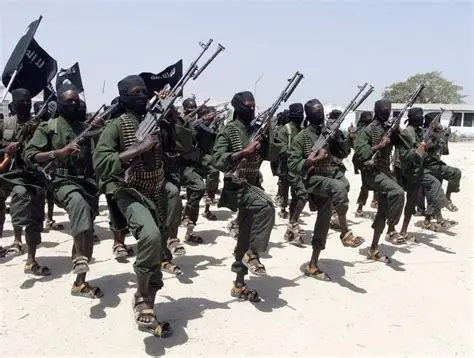
Ghana is facing growing security threats from violent extremist groups expanding southwards from the Sahel and increasingly sophisticated maritime criminal networks operating in the Gulf of Guinea, the Chief of Defence Staff (CDS), Lt. Gen. William Agyapong, has warned.
The stark warning comes amid growing concerns that instability in neighbouring countries could spill over into Ghana if urgent measures are not taken to strengthen border security, maritime surveillance and regional cooperation.
Speaking on behalf of the Deputy Minister of Defence, Ernest Brogya Gyenfi, at the 50th Anniversary Republic Day Public Lecture held at the Ghana Armed Forces Command and Staff College (GAFCSC) in Teshie, Lt. Gen. Agyapong said violent extremist organisations operating in the Sahel have already established a presence in northern parts of neighbouring countries and are now probing further south towards Ghana.
The lecture, organised in partnership with the OneGhana Movement under the theme, “From the Sahel to the Gulf of Guinea: Addressing Violent Extremism and Maritime Insecurity in West Africa – Implications for Ghana and Regional Security,” brought together military leaders, security experts, policymakers and academics to examine emerging threats confronting Ghana and the wider West African region.
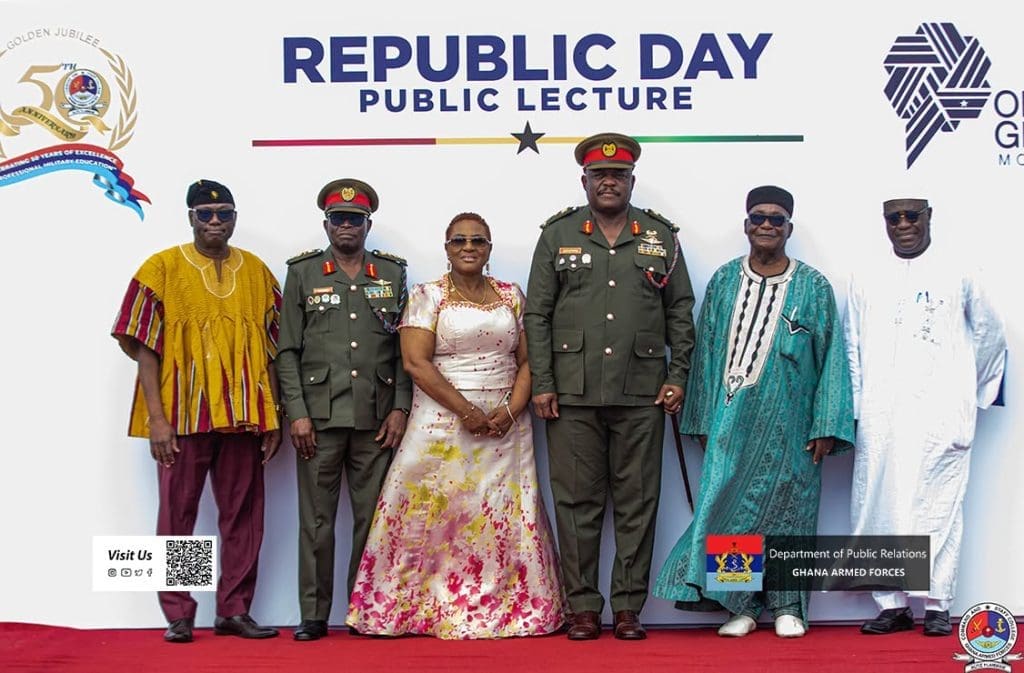
According to the CDS, the security environment in West Africa has changed dramatically in recent years, requiring Ghana to adopt proactive and coordinated responses to safeguard its territorial integrity and national security.
He explained that extremist groups are no longer isolated insurgent movements but have evolved into adaptive, well-resourced and patient organisations capable of exploiting weak governance, porous borders and local grievances to expand their influence.
“They have already penetrated the northern belt of our neighbours to the north and are probing further south. Indeed, some of our compatriots have fallen victim,” Lt. Gen. Agyapong said, referring to recent attacks within the sub-region, including the killing of Ghanaian traders in Titao.
He cautioned that Ghana should not assume it is immune from the growing instability engulfing the Sahel, stressing that developments in neighbouring countries demonstrate how rapidly extremist violence can spread across borders.
Beyond the northern frontier, Lt. Gen. Agyapong warned that Ghana also faces increasing threats along its southern coastline, where criminal activities in the Gulf of Guinea continue to evolve.
He observed that maritime insecurity has become more organised and is increasingly connected to wider transnational criminal networks involved in illegal trafficking, organised crime and, potentially, the financing and logistics of extremist organisations.
The CDS noted that Ghana has experienced several incidents of robbery at sea, particularly attacks targeting fishermen.
According to him, criminals frequently steal outboard motors from fishing vessels and abandon fishermen at sea, threatening not only livelihoods but also the country’s blue economy.
He warned that maritime insecurity now extends beyond ordinary criminality and should be viewed within the broader context of regional security.
“Ghana is geographically positioned between two converging security threats — violent extremism from the Sahel to the north and maritime crime in the Gulf to the south,” he said.
“This is not an alarmist observation. It is a planning reality that requires our full attention.”
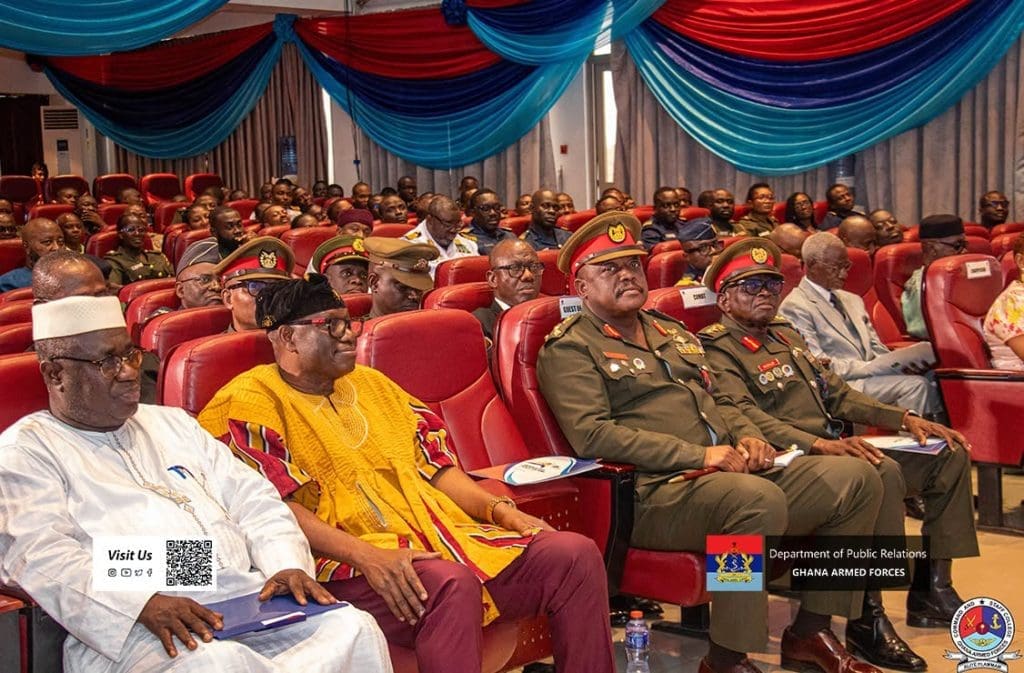
Lt. Gen. Agyapong disclosed that the Government is undertaking significant retooling of the Ghana Armed Forces to improve operational readiness, enhance border security and strengthen maritime surveillance capabilities.
He said investment in intelligence gathering, logistics and modern military equipment remains critical if Ghana is to effectively confront emerging threats.
The CDS further called for stronger collaboration between policymakers, academia and security practitioners, noting that the country’s future security will depend largely on sound strategic thinking and evidence-based policymaking.
He urged officers undergoing training at the Ghana Armed Forces Command and Staff College to develop not only tactical competence but also strategic foresight and ethical leadership.
Modern security threats, he explained, rarely involve conventional battlefield confrontations alone but instead exploit governance weaknesses, poverty, community grievances and ungoverned spaces.
Lt. Gen. Agyapong also paid tribute to the Ghana Armed Forces Command and Staff College as it marks its 50th anniversary, describing it as one of Africa’s leading military institutions that has trained senior military leaders from across the continent.
He challenged the institution to continue evolving to anticipate future security threats rather than merely reacting to crises.
Describing the Sahel as “a warning” and the Gulf of Guinea as “riding the storm,” he stressed that only coordinated regional responses can effectively address the complex security challenges confronting West Africa.
Delivering the first lecture, Kwesi Aning, a security consultant, described the Sahel as the global epicentre of terrorism.
Drawing on developments in Mali, Burkina Faso and Niger, he explained that extremist organisations have become increasingly sophisticated and continue to exploit weak governance, political instability, unemployment and socio-economic challenges to expand their operations.
He warned that the deteriorating situation in the Sahel has serious implications for the security and stability of countries across West Africa, including Ghana.
The second lecture was delivered by former Chief of Naval Staff, Issah Yakubu, who examined the growing connection between violent extremism in the Sahel and maritime insecurity in the Gulf of Guinea.
He observed that maritime crime has evolved significantly over the years, moving from piracy and sea robbery to sophisticated kidnapping-for-ransom operations and organised criminal activities.
Vice-Admiral Yakubu warned that the southward movement of extremist and criminal networks presents fresh security challenges for coastal states and called for stronger maritime governance, enhanced naval capabilities and deeper regional cooperation to protect Ghana’s maritime interests.
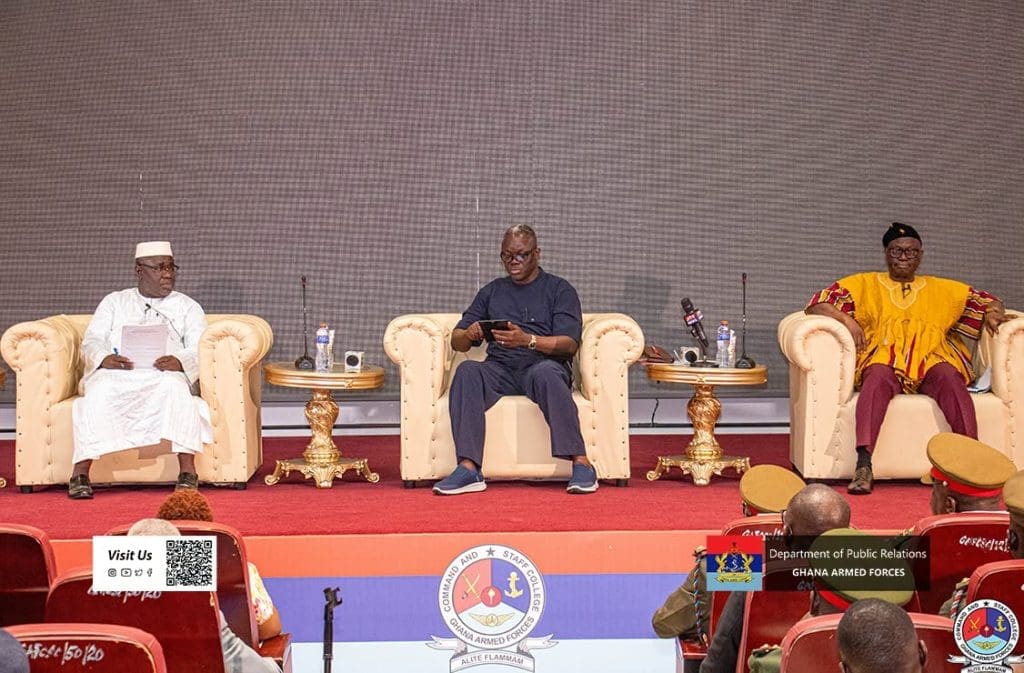
Speaking on behalf of the One Ghana Movement, E. Kofi Abotsi advocated the democratisation of security discussions, arguing that national security should not be regarded solely as the responsibility of state institutions.
He urged citizens to play active roles in promoting peace, reporting suspicious activities and supporting efforts to safeguard national security.
The lecture concluded with the presentation of plaques to the chairperson, Josephine Nkrumah, as well as Professors Kwesi Aning and Vice-Admiral Issah Yakubu (Rtd), in recognition of their contributions to national and regional security dialogue.
The discussions reinforced growing concerns that Ghana’s strategic location between the conflict-ridden Sahel and the increasingly volatile Gulf of Guinea places the country at the frontline of two evolving security threats, underscoring the need for sustained vigilance, stronger institutions and closer regional cooperation to prevent instability from crossing its borders.
SOURCE: Newscenta