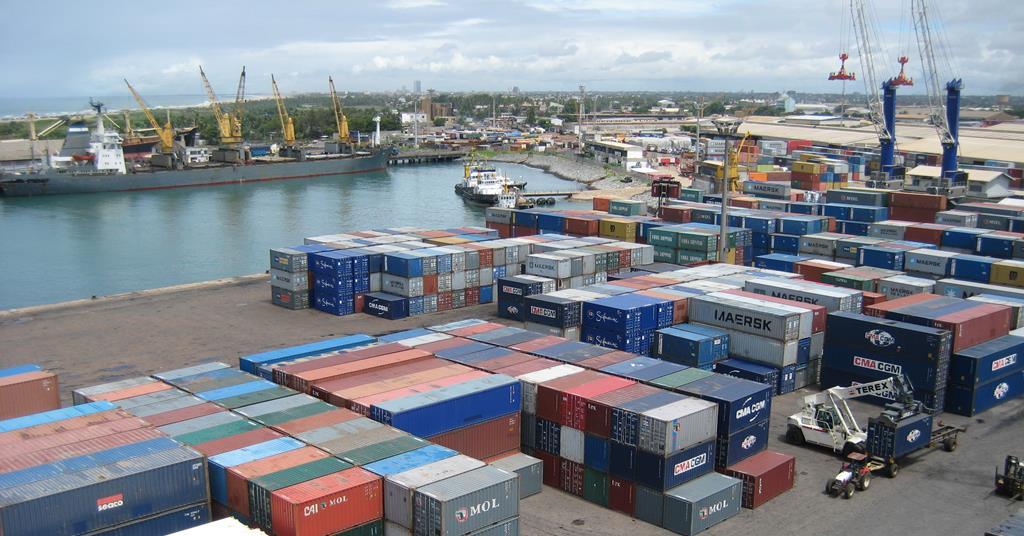
Ghana trades almost nine times more with the world than it did two decades ago. Merchandise trade increased from US$6.00 billion in 2004 to US$52.50 billion in 2025, while the country moved from persistent trade deficits to a record GH¢148.30 billion surplus numbers that, on the surface, suggest a remarkable transformation in its external economy.
But buried beneath that success is a more uncomfortable question: after 21 years of rapid trade expansion, has Ghana fundamentally changed what it produces and sells to the world, or has the country simply become significantly better at exporting the same categories of natural resources while importing much of the sophisticated economic value created from them?
The Ghana Statistical Service’s Ghana’s Merchandise Trade Statistics 2004–2025: Two Decades in Review provides perhaps the clearest evidence yet that the answer is complicated. Ghana has undeniably become a much larger trading economy, but the report itself cautions that “growth in trade has not yet become transformation of the economy behind it.”
That distinction should sit at the centre of Ghana’s economic policy debate. Trade volume measures how much value crosses the border; economic transformation asks how much knowledge, employment, manufacturing capability, technology and income remain inside the country before those goods leave.
The transformation in Ghana’s trade balance has nevertheless been significant. Exports represented only 32.10% of merchandise trade in 2004 while imports accounted for 67.90%; by 2025 the relationship had almost completely reversed, with exports representing 61.30% and imports 38.70%.
The improvement accelerated dramatically in the final three years covered by the report. Ghana’s merchandise surplus rose from GH¢5.30 billion in 2023 to GH¢44.70 billion in 2024 and GH¢148.30 billion in 2025, providing foreign exchange that can support reserves and reduce some of the pressure historically placed on the cedi by persistent external deficits.
Yet a trade surplus is not automatically evidence that an economy has industrialised. A country can generate enormous surpluses because international prices for one commodity rise sharply while remaining structurally dependent on imported manufactured goods, technology and energy and Ghana’s export composition makes that distinction impossible to ignore.
Gold accounted for 38.50% of Ghana’s exports in 2004. By 2025, its share had increased to 63.10%, meaning almost two of every three dollars generated from merchandise exports now comes from one commodity.
The concentration becomes even more striking when gold is considered alongside cocoa beans and crude petroleum. The GSS finds that those three traditional commodities have accounted for an average of about 75.00% of exports since 2011, demonstrating that the expansion of Ghana’s international trade has not been accompanied by an equivalent diversification of its productive base.
This is the paradox at the heart of the record surplus. Ghana’s external position may be stronger today precisely because gold is performing exceptionally well, but greater dependence on gold also means that part of that strength is concentrated in an international commodity market over which Ghana exercises little control.
Gold prices are determined internationally. Ghana can influence production, taxation, formalisation, refining and how much export value is retained domestically, but it cannot determine what global investors will pay when geopolitical risk, interest rates or financial-market sentiment change.
The report therefore describes gold simultaneously as Ghana’s “anchor” and its “exposure”. It now earns more than cocoa and oil combined, yet the greater the economy’s dependence on one commodity, the more a reversal in its world price can transmit through export receipts, fiscal revenues, foreign-exchange availability and ultimately the broader economy.
There is another revealing dimension to the gold story: where it goes. South Africa took 75.60% of Ghana’s gold exports in 2004 and as much as 95.00% in 2008, but the United Arab Emirates subsequently emerged as the leading destination, accounting for 40.80% in 2025.
That geographic change is commercially important, but it does not resolve the fundamental value-addition question. Ghana can change the destination of its gold without necessarily changing its place in the gold value chain; the bigger economic prize lies in capturing more activity around refining, fabrication, financial services, jewellery and other downstream uses before the mineral leaves the country.
Cocoa tells a different but equally important story. Cocoa beans and cocoa products fell from 29.30% of Ghana’s exports in 2004 to 14.00% in 2025, largely because gold and subsequently petroleum expanded much faster.
Yet the decline in market share should not be confused with cocoa becoming economically irrelevant. Cocoa bean exports rose from US$498 million in 2004 to a record US$2.506 billion in 2025, while the GSS says the broader cocoa crop generated a record US$4.20 billion during the year.
The real opportunity is visible in non-traditional exports. Within that category, cocoa products increased their share from 9.80% in 2004 to 27.00% in 2025, edible fruits and nuts doubled from 6.10% to 12.10%, while plastics reached 8.50%.
These may be less spectacular numbers than gold, but economically they could prove more important over the long term. The path towards a diversified export economy is unlikely to come from discovering another commodity capable of replacing gold; it will come from hundreds and eventually thousands of businesses producing processed food, pharmaceuticals, chemicals, machinery components, textiles, plastics and other goods competitively enough to sell beyond Ghana.
The import side of the ledger shows why that transformation remains unfinished. In 2025, mineral fuels and oils accounted for 25.70% of imports, vehicles and automotive parts 15.40%, while machinery and electrical equipment represented another 13.90%.
There is nothing inherently undesirable about importing machinery. In fact, productive economies need capital equipment, and rising imports of machinery can support manufacturing, construction and technological upgrading.
Fuel tells a more uncomfortable story. Ghana became a crude-oil exporter in 2011, yet fuel remains the largest component of the import bill, something the GSS summarises starkly as sending crude oil out while buying refined fuel back.
China was the destination for 44.00% of Ghana’s crude exports in 2025, after replacing France as the dominant market over the previous decade. Ghana therefore participates substantially in the upstream petroleum value chain, but its continuing dependence on imported refined products demonstrates how resource ownership and industrial value capture are not necessarily the same thing.
Food adds another dimension. Food products accounted for 14.40% of imports in 2025, compared with 16.20% in 2004, while food excluding cocoa represented 11.20% of exports.
That means the question of import substitution cannot be reduced to nationalist slogans about “buying Ghanaian”. The economically relevant task is identifying areas where domestic producers can realistically compete on productivity, quality and price reducing vulnerability without forcing consumers and businesses to purchase expensive local alternatives merely because they are local.
Perhaps the most dramatic transformation revealed by the GSS data is not what Ghana trades, but whom it trades with. Europe accounted for 51.20% of exports in 2004, while Asia represented just 7.90%; by 2025, Asia’s share had surged to 50.10%, while Europe had declined to 26.80%.
Imports tell much the same story. Asia’s share increased from 26.90% in 2004 to 48.40% in 2025, while Europe fell from 45.90% to 24.70%, effectively turning Ghana’s commercial axis eastward within a generation.
This is more than an interesting change in geography. Ghana increasingly sells its natural resources into Asian and Middle Eastern value chains while simultaneously purchasing a substantial proportion of its machinery, manufactured goods and other imports from Asia, creating a new form of commercial interdependence that policymakers and businesses must understand.
Africa, meanwhile, accounted for only 17.50% of Ghana’s exports and 14.10% of imports in 2025. Those figures carry an important qualification: the GSS acknowledges that its customs-based data exclude informal cross-border trade, meaning trade with neighbours such as Togo, Burkina Faso and Côte d’Ivoire — and road-based African trade more generally — is likely understated.
Even with that qualification, the figures underline the scale of the opportunity offered by the African Continental Free Trade Area. Ghana hosts the AfCFTA Secretariat, but hosting the institution will mean little economically unless Ghanaian firms can produce competitively enough to sell into the continent’s expanding market.
This returns the debate to productivity. Trade agreements open doors; they do not manufacture the goods that pass through them.
A Ghanaian SME unable to obtain affordable finance, reliable electricity, certification or sufficient production scale will not become an exporter simply because tariffs fall. The GSS consequently argues for improved access to trade finance, market information and export-readiness support to help SMEs meet the standards and volumes required by foreign buyers.
Similarly, value addition cannot mean processing at any cost. Refining gold domestically, expanding cocoa processing or producing petroleum products locally makes economic sense only when Ghana can do so competitively and sustainably rather than protecting inefficient industries indefinitely.
The GSS itself qualifies its recommendation on petroleum by calling for stronger domestic refining capacity “where it is commercially viable”. That phrase deserves emphasis because successful industrial policy is not about replacing imports regardless of cost; it is about building capabilities that eventually compete without permanent protection.
The report also warns against reading the spectacular rise in cedi-denominated trade too literally. Total merchandise trade increased from GH¢5.40 billion to GH¢654.70 billion, more than a hundredfold, but the depreciation of the cedi exaggerates the apparent expansion; in dollars, which the report considers a steadier gauge, trade grew ninefold.
That methodological point carries a wider economic lesson. Ghana should be careful not to confuse bigger nominal numbers with deeper productive transformation, just as it should not confuse a record trade surplus with the completion of industrial development.
A surplus generated predominantly by gold can strengthen reserves and support the currency today. A diversified export economy built around competitive industries, however, is what can make those gains sustainable when commodity prices eventually move in the opposite direction.
Government Statistician Dr Alhassan Iddrisu captures the challenge succinctly: “The lesson is clear: we must add value at home, widen our export base, and produce more of what we currently import.”
After 21 years, Ghana’s trade story is therefore simultaneously one of remarkable progress and stubborn continuity. The country sells far more to the world, imports have fallen dramatically as a share of total trade, Asia has replaced Europe at the centre of its commercial relationships and a GH¢148.30 billion surplus provides an external buffer previous generations of policymakers would have welcomed.
Yet the underlying architecture remains familiar: minerals and agricultural commodities leave Ghana, while fuel, machines, vehicles and manufactured products arrive.
That is why the next milestone should not simply be merchandise trade reaching US$60 billion, US$70 billion or US$100 billion. The more consequential measure will be whether gold’s dominance begins to decline because manufacturing, agro-processing and other non-traditional exports are expanding faster — not because Ghana is producing less gold.
Two decades of evidence show Ghana has succeeded in becoming a bigger trading nation. The challenge of the next two decades is considerably harder: becoming a better-producing nation.
Because ultimately the most important question raised by a US$52.50 billion trading economy is not how much passes through Ghana’s borders. It is how much value Ghana creates before those borders are crossed, how many productive jobs that value creates at home, and how much of the prosperity generated by global trade remains in the hands of Ghanaians after the ships have sailed.
SOURCE: norvanreports