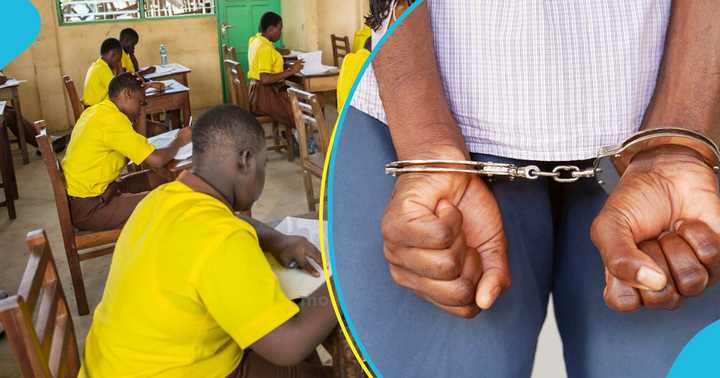
Seven teachers have been arrested for various examination infractions during the ongoing Basic Education Certificate Examination (BECE), according to the West African Examinations Council (WAEC).
The arrests were made through WAEC’s monitoring systems as well as credible tips from whistleblowers, highlighting growing vigilance against malpractice in the examination process.
John K. Kapi, Head of Public Affairs at WAEC, disclosed that three of the suspects were picked up in the Central Region, two in the Bono Region, and the remaining two in the Ashanti Region.
He explained that some of the teachers were caught smuggling mobile phones into examination halls, a clear violation of established rules.
Further investigations revealed a range of sophisticated malpractice methods. While some suspects allegedly solved examination questions on external platforms, others were found to have input questions into artificial intelligence tools such as ChatGPT. In addition, a number of them reportedly took snapshots of the questions and shared them outside the examination centres.
According to Kapi, all seven suspects have been handed over to the police in their respective jurisdictions to assist with ongoing investigations and possible prosecution.
He commended whistleblowers for their critical role in exposing the infractions, noting that their cooperation has significantly strengthened WAEC’s efforts to safeguard the integrity of the examinations.
Kapi also assured the public that the Council has put in place adequate measures to guarantee the timely distribution of question papers and answer booklets across all centres nationwide.
He urged all stakeholders, including teachers, supervisors, and security personnel, to remain vigilant and committed to curbing examination malpractice.
Despite a few isolated challenges reported at some centres, Kapi noted that overall, the examinations have proceeded smoothly.
A total of 619,985 candidates are expected to sit for this year’s BECE, scheduled to run from Monday, May 4 to Monday, May 11, 2026.
Providing a breakdown on Sunday, John Kapi, said 304,273 of the candidates are males, while 315,712 are females.
The candidates, drawn from 20,784 schools, will write eleven subjects at 2,302 centres across the country.
SOURCE: Newscenta