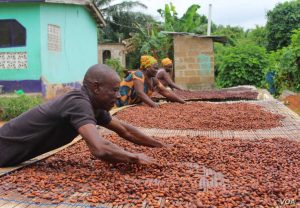
Ghana’s state-owned cocoa buyer, Producer Buying Company, is facing a deepening financial crisis after accumulating debts of GH¢673 million, leaving some farmers unpaid and the company exposed to possible asset seizure.
A company source with knowledge of the matter told Reuters that PBC is currently unable to purchase cocoa from farmers, despite its legal mandate as a buyer of last resort in Ghana’s cocoa sector.
The crisis comes only months after the government pledged in February to restore PBC as the country’s leading cocoa buying company, a move Finance Minister Dr Cassiel Ato Forson had described as central to supporting cocoa farmers.
But three months later, Reuters reported that PBC owes farmers GH¢24 million for more than 9,000 bags of cocoa already delivered and lacks the liquidity required to resume purchases.
A consortium of Ghanaian banks owed GH¢257 million secured a court order in March to sell off the company’s assets, according to the source. Two of the five banks in the consortium are state-owned and all report to the Ministry of Finance.
The situation raises fresh questions about the financial health of Ghana’s cocoa sector, already under pressure from lower global cocoa prices, ample global harvests and weakening demand from chocolate manufacturers.
PBC’s difficulties also expose the widening gap between policy promises and operational realities in the country’s cocoa financing architecture.
The company once controlled about 30% of Ghana’s domestic cocoa purchases, but now buys less than 5% of national output, according to news outlet Reuters. That collapse in market share has weakened its revenue base and limited its ability to serve as an effective public-interest buyer in cocoa-growing communities.
Under Ghana’s cocoa marketing system, licensed buying companies purchase cocoa from farmers and sell the beans to the Ghana Cocoa Board, which then sells to international buyers.
The source told Reuters that COCOBOD has yet to reimburse PBC for 800 metric tonnes of cocoa delivered more than two months ago. Neither the Finance Ministry nor COCOBOD had responded to PBC’s requests for support, the source added. Reuters said the Finance Ministry and COCOBOD did not respond to requests for comment.
The company’s debt burden extends beyond farmer arrears. There are that PBC’s liabilities include more than 24 months of unpaid staff salaries, vendor arrears and outstanding statutory payments, in addition to the GH¢257 million owed to banks.
The distress at PBC is significant because of the company’s historical role in Ghana’s cocoa economy. As a buyer with operations across all 127 cocoa-growing districts, PBC has a reach wider than any private cocoa buying company.
That national footprint once made it a critical stabilising institution for farmers, particularly in areas where private buyers may have weaker commercial incentives to operate.
But without liquidity, PBC’s mandate as buyer of last resort becomes largely symbolic. Farmers who deliver cocoa and remain unpaid face immediate household pressure, including difficulty meeting food, school fee and farm maintenance costs.
The financial strain also risks weakening farmer confidence in formal cocoa marketing channels at a time when Ghana is trying to stabilise its cocoa sector, improve production and rebuild trust in state-led commodity management.
The report also raises governance questions around PBC’s shareholder and policy support structure. SSNIT, the state pension fund and a major shareholder, has been reluctant to inject fresh capital after failing to receive expected dividends from its investment, Reuters reported.
A company source argued that a structured COCOBOD intervention could help stabilise PBC if the regulator directed part of international buyer demand toward the company and released funds to support purchases.
For the government, the problem is delicate. Reviving PBC could support farmers and preserve a strategic public role in the cocoa sector. But any intervention would have to confront the company’s legacy debts, weak market share, unpaid salaries, bank exposure and credibility with growers.
The immediate risk is that unresolved arrears deepen hardship among cocoa farmers and further weaken confidence in licensed buying arrangements.
The broader policy risk is that Ghana’s cocoa sector, long seen as one of the country’s most important export pillars, continues to face financial stress at the very point where the state is promising reform, farmer protection and institutional revival.
For PBC, the test is no longer only whether it can be saved. It is whether any rescue can restore liquidity quickly enough to pay farmers, protect assets from seizure and rebuild a role in a cocoa market that has moved on without it.
SOURCE: Norvanreports.