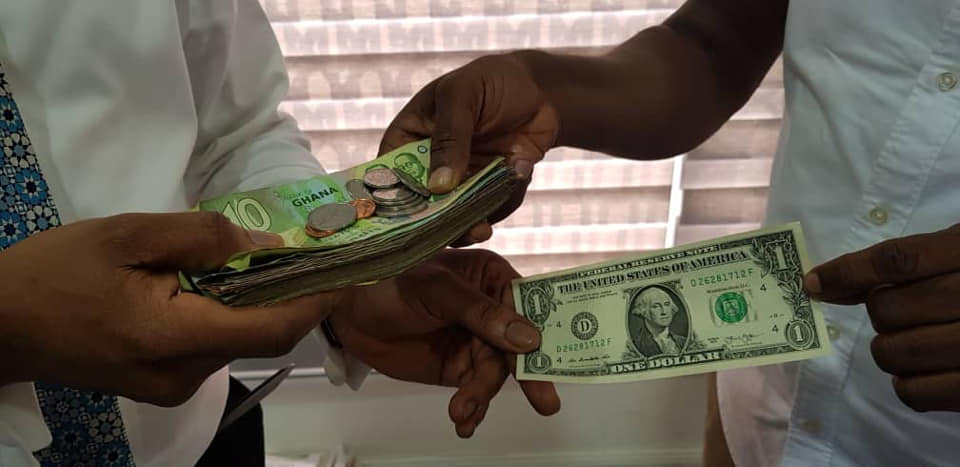
The Electricity Company of Ghana (ECG) recorded a significantly smaller loss in 2025, but beneath the headline improvement lay a powerful force that shaped virtually every aspect of the utility’s financial performance – the remarkable appreciation of the Ghana cedi.
The audited accounts show that the strengthening local currency dramatically reduced the cost of foreign currency-denominated liabilities, eased tariff under-recoveries, lowered the cedi value of power purchase obligations and generated a massive foreign exchange gain of more than GH¢12 billion.
Without this favourable currency movement, ECG’s financial performance would have been substantially worse, with losses approaching levels rarely seen in the company’s history.
The figures suggest that while management benefited from one of the most favourable exchange rate environments in recent years, the company’s underlying operational challenges remained largely unresolved, as reflected in deep operating losses and deteriorating cash flows.
Stronger Cedi reverses ECG’s forex fortunes
Currency markets delivered one of the biggest financial lifelines for ECG in 2025.
After enduring a year of severe exchange rate losses in 2024 as the cedi depreciated sharply against major international currencies, the situation reversed dramatically in 2025.
The average exchange rate of the cedi strengthened significantly across all the currencies that matter most to ECG’s operations. The average exchange rate against the US dollar improved to GH¢10.45 from GH¢14.81 in 2024.
Similar gains were recorded against the British pound, which appreciated from GH¢18.40 to GH¢14.06, the euro, which strengthened from GH¢15.43 to GH¢12.27, and the International Monetary Fund’s Special Drawing Rights (XDR), which declined from GH¢19.81 to GH¢14.35.
For a company whose electricity purchases, power purchase agreements, fuel costs and borrowing obligations are heavily linked to foreign currencies, particularly the US dollar, these exchange rate movements fundamentally altered its financial position.
The impact was immediate and substantial.
ECG recorded a net foreign exchange gain of GH¢12.16 billion in 2025, representing one of the largest positive currency adjustments ever reported by the utility.
The figure contrasts sharply with the previous year’s foreign exchange loss of GH¢8.84 billion, producing an extraordinary year-on-year positive swing of almost GH¢21 billion.
The reversal illustrates how sensitive ECG’s financial performance has become to movements in the exchange rate, with currency fluctuations now exerting as much influence on profitability as electricity sales and operational efficiency.
Forex gain prevented a much larger financial collapse
Perhaps the clearest indication of the cedi’s importance emerges when the foreign exchange gains are stripped from ECG’s income statement.
The audited accounts show that ECG reported a pre-tax loss of GH¢2.49 billion in 2025.
However, removing the GH¢12.16 billion foreign exchange gain reveals that the company’s underlying pre-tax loss would have ballooned to approximately GH¢14.65 billion.
In effect, the stronger cedi reduced ECG’s reported pre-tax loss by over GH¢12 billion.
The comparison with 2024 is equally revealing.
That year, ECG reported a pre-tax loss of GH¢7.4 billion.
Yet excluding the foreign exchange loss of GH¢8.84 billion, the company would actually have recorded a modest pre-tax profit of about GH¢1.44 billion.
The figures demonstrate how exchange rate movements completely transformed the narrative between the two years.
In 2024, operational performance was overwhelmed by the weakening cedi.
In 2025, the strengthening currency largely rescued an otherwise severely loss-making business.
The same pattern appears in the bottom-line figures.
ECG reported a net loss after tax of GH¢2.52 billion in 2025.
Without the foreign exchange gain, the company’s net loss would have approached GH¢14.68 billion.
This means almost the entire improvement in the bottom line can be attributed to exchange rate gains rather than improvements in the company’s core electricity distribution business.
Currency strength improved tariff cost recovery
The stronger cedi also played an important role in improving ECG’s tariff-recovery position.
Electricity tariffs in Ghana are reviewed quarterly by the Public Utilities Regulatory Commission (PURC), with adjustments intended to reflect changes in generation costs, fuel prices and exchange rate movements.
Since much of Ghana’s electricity generation costs are denominated in US dollars, exchange rate stability directly influences how much of those costs can be recovered through tariffs.
The appreciation of the cedi significantly reduced the gap between actual power purchase costs and the amount recoverable through approved tariffs.
According to the audited accounts, unrecovered tariff pass-through costs fell from GH¢5.75 billion in 2024 to GH¢3.91 billion in 2025.
This represents an improvement of approximately GH¢1.84 billion.
The unit economics tell an even stronger story.
The gap between ECG’s Bulk Generation Charge and the PURC-approved Bulk Generation Charge narrowed dramatically from 34.63 Ghana pesewas per kilowatt-hour in 2024 to just 6.15 Ghana pesewas per kilowatt-hour in 2025.
In practical terms, only about six per cent of power purchase costs remained outside the tariff recovery mechanism in 2025 compared with much larger under-recoveries in the previous year.
The appreciation of the cedi therefore reduced the financial burden associated with imported fuel costs and dollar-denominated power purchase agreements, enabling tariffs to recover a much larger proportion of ECG’s actual costs.
Exchange rate gains did not generate cash
Despite the enormous foreign exchange gain, ECG’s cash position tells a very different story.
Foreign exchange gains recorded in the income statement are largely accounting adjustments arising from the translation of foreign currency liabilities rather than actual cash inflows.
Consequently, these gains are removed when calculating cash generated from operating activities.
The audited accounts reveal that operating cash flow deteriorated sharply during the year.
Cash generated from operations swung from a positive GH¢6.51 billion in 2024 to a negative GH¢12.54 billion in 2025.
This means ECG consumed more than GH¢12 billion in cash while running its normal operations despite reporting a much smaller accounting loss.
The contrast highlights an important distinction between accounting profit and financial sustainability.
Although exchange rate movements significantly improved reported earnings, they did not improve ECG’s ability to generate cash from electricity sales.
Instead, the company’s weak cash generation continued to reflect deep operating losses, growing receivables and continuing working capital pressures.
For investors, lenders and policymakers, this distinction is critical because debt repayments, capital investment and supplier obligations require cash rather than accounting gains.
Foreign debt burden eased as cedi appreciated
The appreciation of the cedi also reshaped ECG’s balance sheet.
Many of the company’s borrowings and power purchase obligations are linked directly or indirectly to foreign currencies.
As the cedi strengthened, the value of these obligations declined when translated into Ghana cedis.
The audited accounts indicate that foreign exchange revaluation reduced the carrying value of borrowings by approximately GH¢1.24 billion through a non-cash translation adjustment.
This helped moderate the impact of ECG’s debt obligations.
However, this benefit was more than offset by the introduction of the Ministry of Finance’s GH¢20.86 billion Independent Power Producer support facility.
The facility, which is denominated in cedis, transferred outstanding obligations owed to Independent Power Producers and fuel suppliers onto ECG’s balance sheet as formal borrowings.
As a result, total borrowings increased dramatically to GH¢24.65 billion.
Although leverage rose sharply, the government intervention provided immediate relief by replacing overdue supplier obligations with structured debt that can be repaid over time.
Power purchase obligations declined
The stronger cedi also contributed to a6 significant reduction in ECG’s outstanding trade payables.
Trade payables relating largely to electricity purchases declined from GH¢45.47 billion in 2024 to GH¢29.79 billion in 2025.
Part of the reduction resulted from settlements financed through the Ministry of Finance support programme.
However, the appreciation of the cedi also reduced the Ghana cedi value of dollar-denominated obligations, further lowering the amount recognised on the balance sheet.
Foreign currency exposures likewise declined.
ECG’s net exposure to the US dollar improved considerably, while trade creditor balances denominated in dollars also reduced substantially.
Although foreign currency trade receivables increased during the year, the stronger cedi lowered their value in local currency terms, partly offsetting the benefit of higher foreign receivable balances.
The overall effect was a significant reduction in ECG’s vulnerability to exchange rate movements compared with previous years.
Profitability remains highly sensitive to currency movements
Although the cedi appreciated significantly during 2025, the audited accounts demonstrate that ECG remains exposed to future currency volatility.
Sensitivity analysis included in the financial statements shows that even a relatively small movement in the US dollar exchange rate around year-end could affect reported income by approximately GH¢36.1 million.
This confirms that foreign exchange risk continues to represent a major financial variable despite improvements in the company’s currency exposure.
Future depreciation of the cedi could therefore reverse many of the gains achieved in 2025, particularly if accompanied by higher fuel prices or increased power purchase costs.
Recovery still depends on operational reform
The 2025 financial statements demonstrate that exchange rate movements were the single most influential factor shaping ECG’s financial performance during the year.
The appreciation of the cedi generated a GH¢12.16 billion foreign exchange gain that dramatically reduced reported losses, narrowed tariff under-recoveries by approximately GH¢1.84 billion, lowered the cedi value of foreign currency borrowings and contributed to the reduction in power purchase obligations.
Yet the same financial statements reveal that these benefits were largely accounting and valuation gains rather than improvements arising from the company’s core operations.
Without the currency windfall, ECG would have reported a pre-tax loss of nearly GH¢14.65 billion. More importantly, despite the favourable exchange rate environment, the company still recorded a negative operating cash flow of GH¢12.54 billion, underlining the continued weakness of its underlying business model.
The figures therefore suggest that while exchange rate stability provided ECG with valuable financial breathing space in 2025, sustainable recovery will ultimately depend on reducing technical and commercial losses, improving revenue collection, maintaining cost-reflective tariffs and converting heavy investment in network infrastructure into stronger operational performance.
The stronger cedi may have transformed ECG’s reported earnings in 2025, but the company’s long-term financial health will ultimately be determined by operational reforms rather than movements in the foreign exchange market.
SOURCE: newscenta