By: Evans Attah Akangla| ignewss| Ho
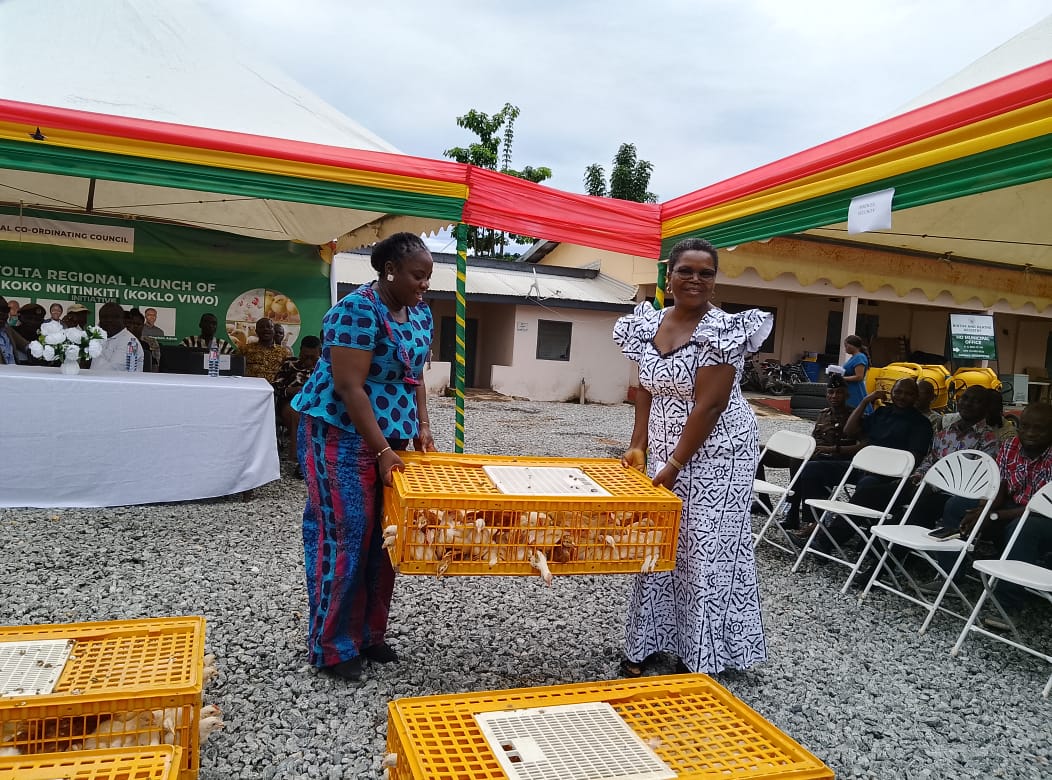
The National Coordinator of the Feed Ghana Program, Mr. Bright Demordzi, has described the Akokor Nkitinkiti (Koklo Viwo) initiative as a major intervention aimed at economic recovery, job creation, and strengthening food security in Ghana.
He made the remarks during the launch of the Volta regional phase of the project, which officially commenced the distribution of poultry to household beneficiaries under the Feed Ghana Programme.
According to Mr. Demordzi, Ghana can no longer continue importing products that can be produced locally, stressing that the government remains committed to expanding production and working closely with stakeholders to build a resilient and self-sufficient poultry industry.
He explained that the rollout of the Akokor Nkitinkiti initiative had become necessary due to Ghana’s heavy reliance on poultry imports over the years.
Mr. Demordzi disclosed that prior to 2025, Ghana’s annual poultry meat demand exceeded 350,000 metric tonnes, while local production accounted for less than five percent, approximately 15,000 metric tonnes. The remaining deficit of over 300,000 metric tonnes was covered through imports, making Ghana one of the continent’s most import-dependent poultry markets.
To address the situation, President John Dramani Mahama launched the Nkoko Nkitinkiti initiative in Kumasi in November 2025 as a flagship programme under the Feed Ghana agenda.
The project seeks to reduce import dependence, restore confidence among poultry farmers, and revive the entire poultry value chain from breeding and production to processing and marketing.
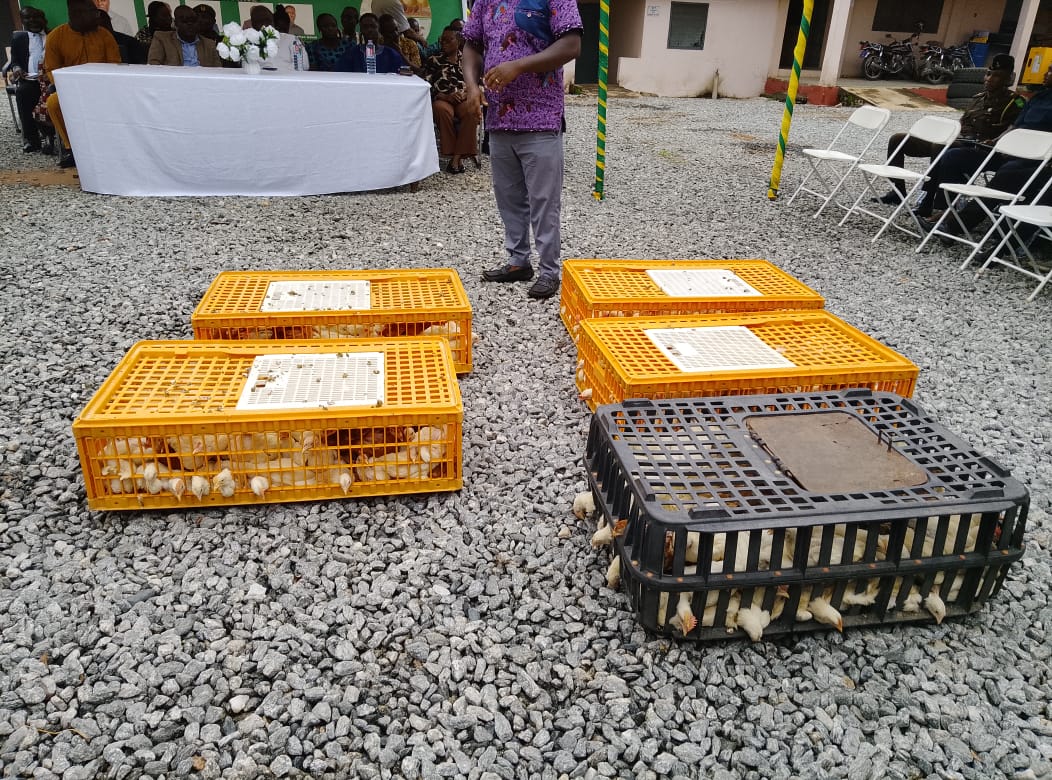
Under the initiative, service providers have been engaged across all metropolitan, municipal, and district assemblies nationwide. Beneficiaries are supplied with day-old chicks, vaccines, veterinary medicines, and four weeks of intensive brooding support to reduce mortality rates and ensure healthy bird growth before final distribution.
Mr. Demordzi indicated that the programme is expected to reduce poultry imports by between 10 and 15 percent during its initial phase, potentially saving Ghana between 30 million and 60 million dollars annually.
He added that the intervention would also create employment opportunities in feed production, hatcheries, veterinary services, transportation, processing, and marketing.
The initiative is further expected to strengthen the local maize and soya value chains due to increasing demand for poultry feed as domestic production expands.
According to him, this would support Ghana’s import substitution agenda while improving food security, particularly for low- and middle-income households.
He noted that resources had already been dispatched to various assemblies in collaboration with the Department of Agriculture, with distribution currently underway for registered beneficiaries in the Volta Region. The programme mainly targets youth- and women-led enterprises, as well as small- and medium-scale poultry farmers who comply with biosecurity and extension service guidelines.
Meanwhile, the Volta Regional Minister, Hon. James Gunu, confirmed that the region had received 180,000 birds under the Volta phase of the Akokor Nkitinkiti project.
Speaking after the launch held at the Ho Municipal Assembly Forecourt on Tuesday, 26 May 2026, Hon. Gunu explained that each of the region’s 18 municipal and district assemblies would receive 10,000 birds for onward distribution.
According to him, every beneficiary household is expected to receive 50 birds as part of government’s broader poverty reduction and livelihood improvement strategy.
The Regional Minister described the programme as one that aligns with traditional poverty alleviation approaches while also promoting long-term economic sustainability for households.
He further disclosed that beneficiaries would undergo training on poultry management, including vaccination, feeding, and proper care of the birds. Feed support will also be provided to help ensure successful poultry production and improved household nutrition and income.
Hon. Gunu emphasised that the birds should be viewed not merely as livestock but as investments capable of generating sustainable income for families across the region.
He therefore urged beneficiaries to take proper care of the birds and commended President Mahama for fulfilling his promises through the implementation of the initiative.
Source: www.ignewss.com|Ghana