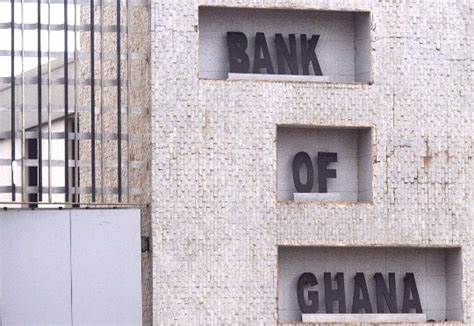
The Bank of Ghana absorbed GHS 14.63 billion from the market through the sale of short-term central bank securities, signalling continued active liquidity management by the monetary authority.
Results of Tender 867, held on June 22, 2026, showed that the central bank sold GHS 14,625.52 million in 14-day Bank of Ghana bills.
The securities, issued under ISIN GHCBAGH01140, recorded a weighted average discount rate of 10.46% and a weighted average interest rate of 10.50%.
The latest auction represents a significant increase from the previous Bank of Ghana bill sale, when the central bank absorbed GHS 10.00 billion through 14-day bills. This means the amount sold rose by GHS 4.63 billion, representing an increase of 46.26%.
The Bank of Ghana bills were allotted at discount rates ranging from 10.4577% to 10.4578%, while the corresponding interest rates ranged from 10.4999% to 10.5000%.
The narrow bid range suggests that participating banks priced the instrument almost uniformly, reflecting stable short-term market expectations and a clear view of the central bank’s liquidity stance.
Unlike Government of Ghana Treasury bills, which are issued to raise short-term financing for government, Bank of Ghana bills are monetary policy instruments. They are used by the central bank to absorb excess liquidity from the banking system and guide short-term money market conditions.
The latest GHS 14.63 billion sale is therefore a liquidity-mopping operation.
By selling the 14-day bills, the central bank temporarily withdraws liquidity from the financial system. This helps manage excess money supply, reduce pressure on the foreign exchange market and support price stability.
The size of the sale suggests that the Bank of Ghana remains alert to liquidity conditions even as inflation has eased and broader macroeconomic indicators have improved.
Excess liquidity in the banking system can create demand pressures, encourage speculative foreign exchange activity and weaken the transmission of monetary policy. Central bank bills allow the Bank of Ghana to sterilise such liquidity without permanently altering the structure of the financial system. The 14-day tenor also gives the central bank flexibility.
Because the instrument matures quickly, the Bank of Ghana can reassess liquidity conditions frequently and adjust the size of subsequent auctions depending on market developments.
This is important in a period where fiscal operations, foreign exchange flows, government payments and banking sector liquidity can shift quickly.
For participating banks, the short-term bill provides a safe and liquid avenue for placing surplus funds while earning a return of 10.50%.
For the central bank, it provides a practical tool for keeping liquidity aligned with its monetary policy objectives.
The auction result also points to continued appetite among banks for short-term central bank instruments. The scale of participation suggests that banks still have substantial liquidity available for placement with the monetary authority.
The weighted average interest rate of 10.50% also indicates that short-term central bank liquidity operations remain priced well below the levels seen during Ghana’s recent high-inflation and tight monetary policy cycle.
That lower rate environment reflects the improvement in inflation, exchange rate stability and market expectations.
However, the Bank of Ghana’s continued absorption of large amounts shows that lower inflation does not mean liquidity management has become less important.
The central bank must still ensure that liquidity conditions do not undermine recent macroeconomic gains.
For businesses and households, the direct impact of Bank of Ghana bill auctions may not be immediately visible. But these operations influence the broader financial environment by helping manage money market conditions, inflation expectations and exchange rate stability.
If liquidity is not properly controlled, inflationary pressures can re-emerge, the cedi can come under pressure and interest rate conditions may become unstable.
At the same time, sustained liquidity absorption must be carefully calibrated.
If the central bank withdraws too much liquidity from the banking system, it could reduce banks’ ability or willingness to expand credit to businesses and households. This could affect private sector activity.
The Bank of Ghana must preserve price and exchange rate stability without unnecessarily constraining credit to the real economy.
The latest operation suggests that the central bank is still prioritising disciplined liquidity management as Ghana continues to consolidate recent macroeconomic improvements.
With GHS 14.63 billion absorbed at a weighted average interest rate of 10.50%, the Bank of Ghana is sending a clear signal that it intends to keep short-term liquidity under control.
The auction may be short in maturity, but its policy message is significant: the central bank remains active, cautious and focused on protecting stability.
SOURCE: Norvanreport