By: ignewss | Ghana
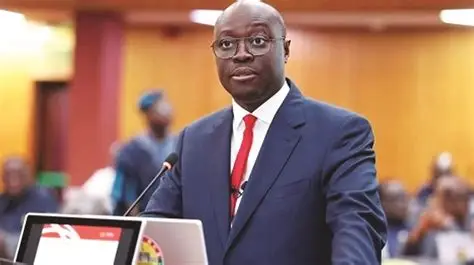
Ghana’s New Economy programme is being presented as more than a growth initiative: Finance Minister Dr Cassiel Ato Forson says it is part of a route towards an investment-grade credit rating, with the prospect of cheaper borrowing for the state and businesses.
The proposition links economic policy to the cost of capital. A stronger sovereign credit profile could help Ghana attract a broader pool of investors, reduce the cost of issuing debt and create conditions for companies to raise longer-term funds through corporate bonds.
“If we are able to get to investment grade, we would have laid the foundation for corporate bonds and others to take off,” Dr Forson said at a New Economy engagement in Accra. He added that the country needed to keep its economy “stable and predictable” and demonstrate that it had policies capable of sustaining those gains.
That is a significant ambition for a country still rebuilding its credibility after the 2022–24 economic crisis, debt default and domestic debt exchange. Dr Forson said the domestic bond market had largely ground to a halt in 2022 and that local banks lost access to credit lines. “Now we have restored it and the country is now rated B,” he said. “We want to get to investment grade.”
The minister’s remarks set out a potential chain of benefits: improved macroeconomic stability supports a stronger sovereign rating; a stronger rating can attract more investors; and a deeper market could provide firms with an alternative to bank loans for funding equipment, expansion and new projects.
But each link depends on outcomes that must be sustained. A rating aspiration does not itself reduce borrowing costs, and a sovereign upgrade does not automatically create a functioning corporate bond market. Businesses also need predictable rules, transparent accounts, credible repayment prospects and investors willing to buy their securities.
The New Economy’s investment-grade case therefore turns on the quality of implementation as much as the scale of the programme. The government has described the initiative as a US$10 billion investment programme, with further details expected in the 2027 Budget.
The budget will need to show how the programme’s investment plans fit within fiscal limits, what financing sources are expected and how projects will be chosen and assessed.
The International Monetary Fund’s recent assessment offers a measure of the narrow path policymakers are trying to follow.
Ghana’s economy grew by 6.2 per cent year on year in the first half of 2026, and the Fund projected full-year growth of 5.7 per cent. October inflation was 5.5 per cent, below the Bank of Ghana’s target band, while the 2027 budget is expected to target a primary surplus of 0.5 per cent of GDP.
The Fund said investment under the New Economy should be supported by rigorous project appraisal, competitive procurement and strict expenditure controls to protect value for money and debt sustainability.
Those conditions matter because the programme’s credibility will be judged against the country’s capacity to preserve the stability it has regained.
The IMF has said the lower primary surplus target from 2027 can remain consistent with debt sustainability, provided Ghana makes further progress in domestic revenue mobilisation, public financial management and oversight of state-owned enterprises, particularly in the energy and cocoa sectors.
A fiscal target can provide discipline, but it cannot on its own guarantee productive spending. If investment projects are delayed, poorly selected or cost more than expected, they may add to public liabilities without generating the growth and revenues needed to service them.
Conversely, well-designed investment can help raise productivity and expand the tax base, creating more room to fund infrastructure and public services over time.
The choice of projects will be central to the programme’s test. A US$10 billion headline figure signals scale, but investors and businesses will want to know how much is public spending, how much is expected from private capital, and what mechanisms will allocate and monitor the funds.
The details should allow the public to track commitments against disbursements, construction against completion, and spending against measurable economic results.
There is also a question of policy continuity. Dr Forson said investment-grade status requires evidence that the policies behind stability can endure. In a separate statement issued on November 8, the Institute for Energy Policies and Research (INSTEPR) urged the government to account for earlier policy commitments and spell out how the New Economy would differ in implementation from the 24-Hour Economy.
Its intervention reflects a broader credibility challenge: new programmes compete for confidence with promises already made and with the public’s experience of whether they were delivered.
That concern is relevant to investors as well as citizens. Credit assessments consider a country’s ability and willingness to meet its obligations over time. Predictability depends not only on policy announcements but also on whether budgets are realistic, institutions publish reliable information and governments follow through when conditions become difficult.
The proposed corporate bond market highlights the potential payoff. Ghanaian companies that can borrow for longer periods may be better positioned to invest in factories, machinery and expansion than if they rely mainly on short-term bank credit.
Yet the market will not deepen simply because sovereign risk improves. It will also require strong corporate governance, consistent financial disclosure and a diversified base of domestic investors, including pension funds and insurers.
A rating upgrade could help, but it would be one component of that broader financial infrastructure. The same applies to the government’s goal of lowering borrowing costs: the result would depend on sustained fiscal discipline, market confidence and the terms on which Ghana can issue debt not merely on the label attached to its credit rating.
The 2027 budget will provide the first substantial opportunity to connect the New Economy’s investment-grade argument to practical choices. It can clarify how the programme will be financed, which sectors and projects will receive support, how private investment will be mobilised and what safeguards will govern delivery.
SOURCE: norvanreports