By: Daniel Yao Akpabli | ignewss — Jenwa, Ghana
Located several kilometres from the district capital of Krachi West in Ghana’s Oti Region lies Jenwa, a small farming community that appears almost forgotten by the pace of development elsewhere.
Inside Ghana News Service, Daniel Yao Akpabli’s journey into Jenwa tells the story of a community whose hopes are almost lost.
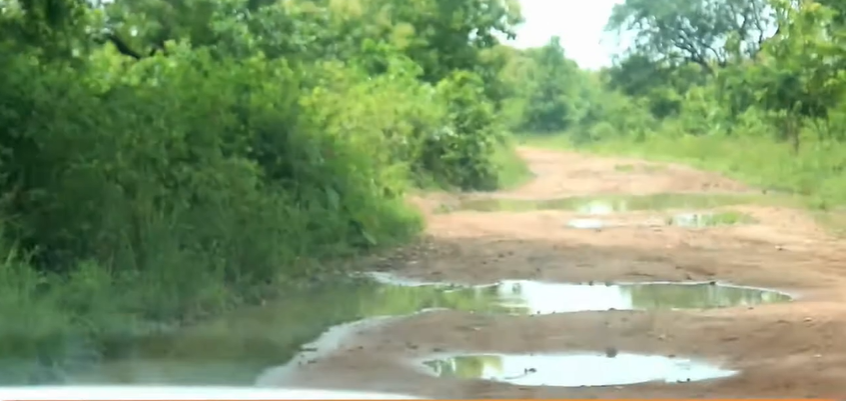
Roads connecting the community to neighbouring villages are rough and, in several places, difficult to navigate. For residents, the condition of the roads is a daily reminder of the long-standing development challenges confronting Jenwa and other settlements scattered across the Krachi West District.
Yet beneath the apparent isolation are communities whose contribution to Ghana’s food supply is significant.
Agriculture remains the backbone of the local economy. About seventy per cent (70%) of households in the area are engaged in agriculture-related activities, producing crops such as cassava, yam, maize, groundnuts and soya beans.
From the farms surrounding Jenwa and other communities in the district, these farmers feed local markets and contribute to the food basket of the Oti Region and Ghana as a whole.
But while their farms connect them to the wider economy, inadequate infrastructure continues to keep many residents disconnected from essential services and opportunities.
A community searching for a signal
One of the most striking challenges in Jenwa is access to telecommunication services.
Residents accustomed to living without reliable mobile network coverage, making a simple telephone call can become an expedition.
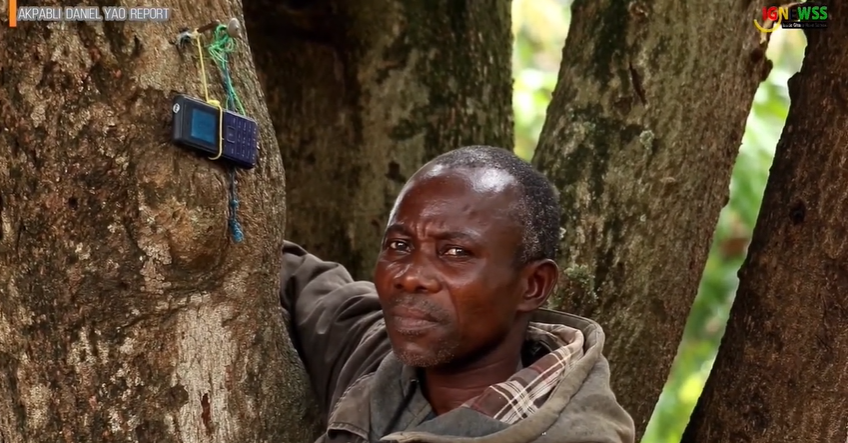
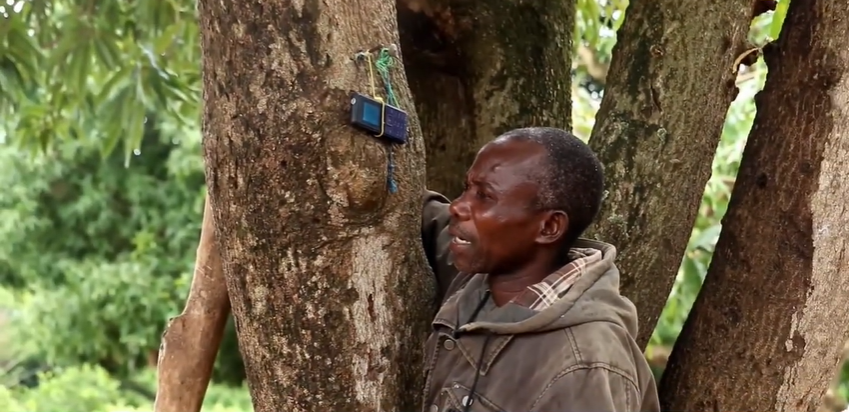
At a makeshift communication point in the community, residents gather around a particular tree where mobile network signals are strong enough to make and receive calls. It has become an unlikely communication centre.
People travel to the spot to speak with relatives, conduct business and maintain contact with family members living outside the community.
For many residents, the routine is frustrating but unavoidable.
If a resident wants to make a call, the phone may have to be taken to the location and hung on a particular tree where the network signal is available. Once the call is completed, the resident returns home.
The problem becomes even more difficult when the phone battery runs low. Jenwa does not have electricity.
For a community increasingly dependent on mobile technology, the absence of reliable electricity and telecommunication services is more than an inconvenience. It is a barrier to participation in modern economic and social life.
Nights without electricity
As darkness falls over Jenwa, another dimension of the community’s isolation becomes apparent.
Residents who need to charge their mobile phones often must travel considerable distances to places where charging facilities are available. Some spend much of the day away from their homes simply to charge a device that has become essential for communication, commerce and access to information.
“If you go someplace, they will tell you that the charger is not available. Sometimes you would have to wait until it was your turn to charge your phones. We spend the whole day in Kete-Krachi to charge our phones,” a resident explains, describing the difficulty of finding places to charge their phones.
Without electricity, there is no regular television service in many homes and limited access to other forms of entertainment and information.
“We don’t have anything here. So if you have to make a phone call, you do. When you finish your call, you go to sleep, that’s all.” One resident puts the situation bluntly.
The absence of electricity has implications beyond leisure.
Residents said access to television and other information platforms would help educate the community, particularly young people.
The absence of electricity also means residents have limited opportunities to access news, educational programmes and information that could improve their livelihoods and broaden their understanding of events beyond the community.
For young people, the consequences can be particularly serious.
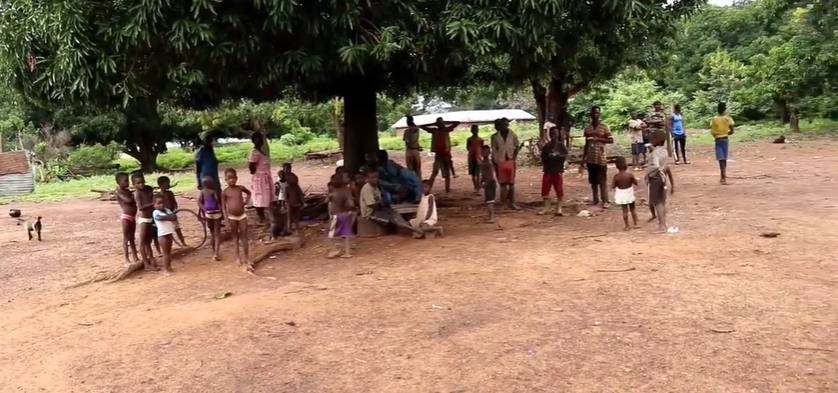
With little organised recreation or entertainment after dark, residents say children and teenagers often have few alternatives to spending their evenings at home or at informal gatherings.
Some residents associate the lack of recreational facilities and activities with social challenges, including teenage pregnancy.
It is a concern that extends beyond entertainment. Community leaders and residents say meaningful development must include opportunities for young people to learn, interact and engage in productive activities.
Hope came in 2021.
For Jenwa, there was a moment when residents believed a major transformation was finally within reach.
In 2021, electricity poles were erected in the community, raising hopes that Jenwa and surrounding settlements would soon be connected to the national electricity grid.
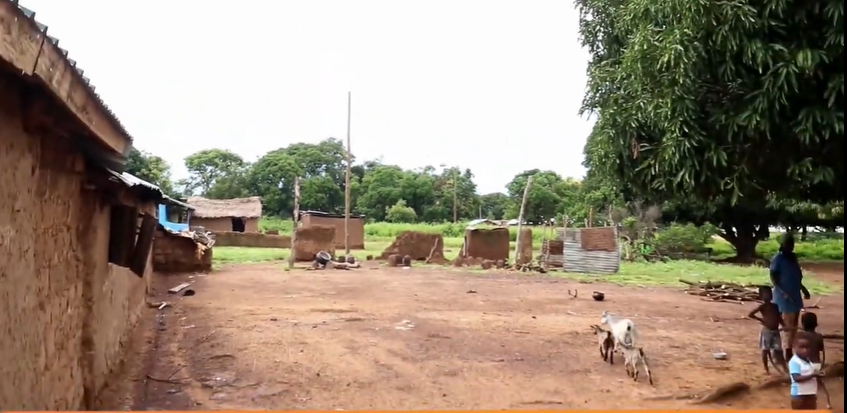
The arrival of the poles generated excitement, and for residents, electricity promised more than light.
It meant the possibility of charging mobile phones within the community instead of travelling long distances, and also, television sets could become part of household life, giving families access to information, education and entertainment.
Electricity could also create opportunities for small businesses, improve study conditions for children and provide a foundation for other development initiatives.
But years later, the promise of electricity remains largely unfulfilled.
The poles stand as a visible reminder of expectations that have yet to translate into regular power supply.
Development beyond electricity
For residents, however, electricity is only one part of a much larger development deficit.
Aside from bad roads and poor telecommunication networks, Jenwa and surrounding communities continue to face challenges involving schools, potable water and other basic social amenities.
The absence of these facilities compounds the community’s isolation.
Poor roads make movement difficult, particularly for farmers to transport produce from their farms to markets. Limited communication services make it harder for residents to connect with businesses, relatives and public institutions. The absence of electricity restricts access to information and constrains economic activity, among others
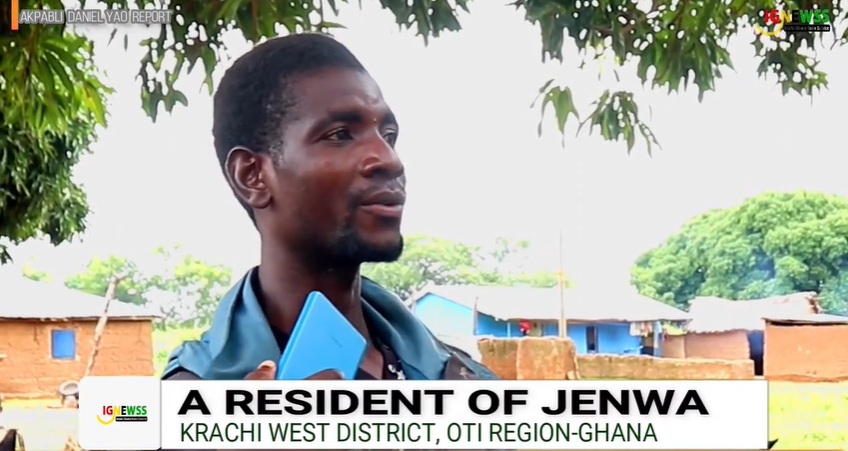
For communities whose residents work hard to produce food for the wider population, the contrast is stark.
The farmers of Jenwa and surrounding communities are connected to Ghana’s economy through the food they produce, yet the infrastructure needed to support their livelihoods remains inadequate.
Waiting to be connected
Jenwa’s story is not simply one of deprivation. It is also a story of resilience.
Every day, farmers leave their homes and head to their fields. They cultivate cassava, maize, yam, groundnuts, soya beans and other crops that eventually find their way into markets.
Families continue to raise their children and build their lives despite the limitations around them. But residents believe resilience should not be mistaken for acceptance.
They want the basic infrastructure that can help transform their community and unlock the economic potential that already exists.
They want roads that make it easier to transport farm produce. They want reliable electricity. They want mobile network coverage that allows them to communicate without travelling to a particular tree. They want schools, safe drinking water and other basic social amenities.
For now, Jenwa remains a community on the margins of the district’s development landscape.
Its farmers continue to feed the nation while its residents wait for development to reach their doorstep.
The electricity poles erected in 2021 remain perhaps the clearest symbol of that wait: a physical sign of a promise made and a reminder of how long some communities must wait before the benefits of development become a reality.
For Jenwa, the road to development is still unfinished.
CLICK THE LINK TO WATCH THE FULL FEATURE HERE: Hang and call community – YouTube
SOURCE: www.ignewss.com