By: Daniel Yao Akpabli | ignewss – HO, Volta Region, GHANA
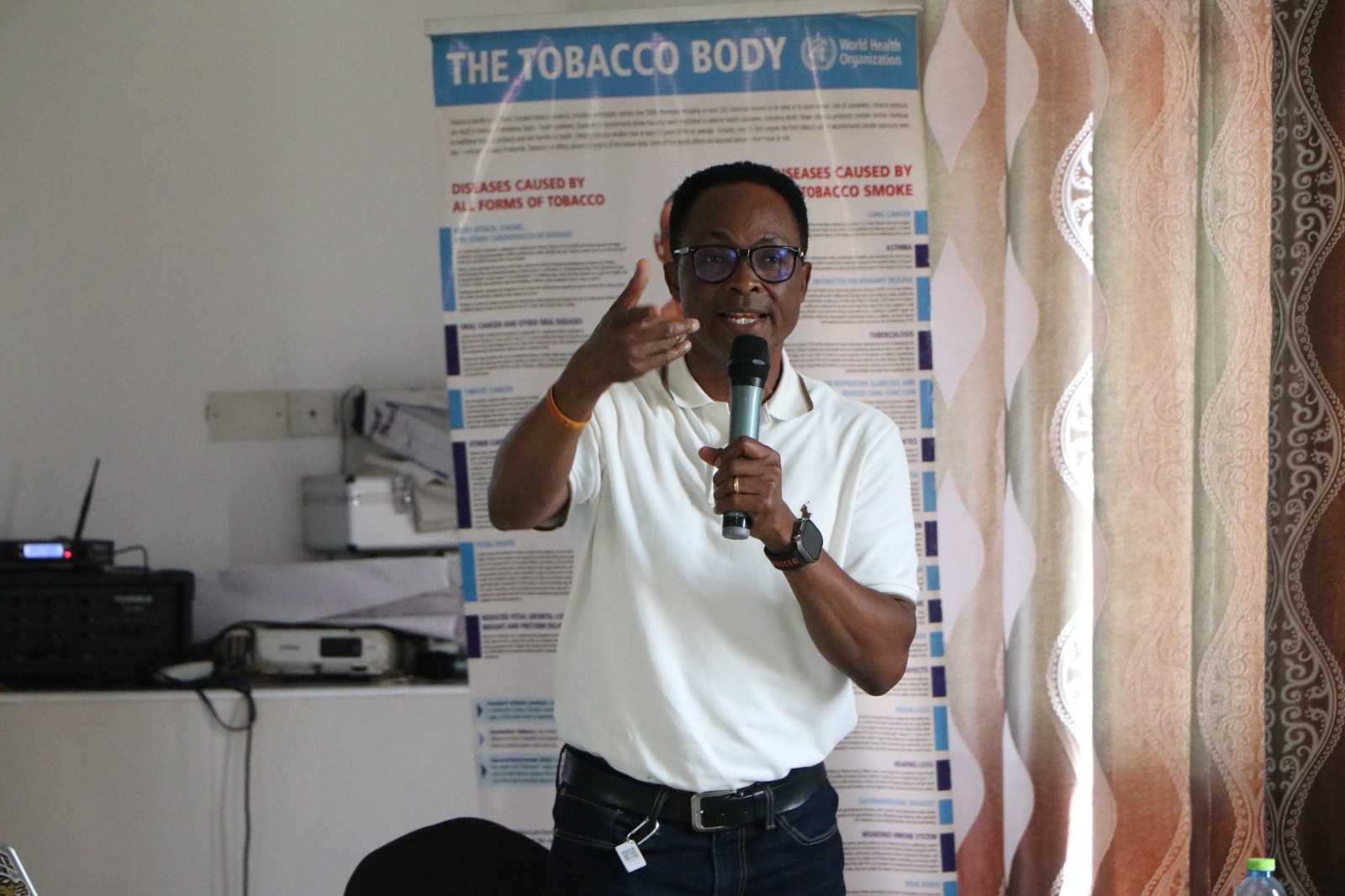
A Deputy Chief Health Research Officer at the Ghana Health Service (GHS), Dr Darlington Divine Logo, has warned that tobacco use among young people in Ghana is a growing concern, urging authorities and parents to intensify efforts to prevent children from becoming addicted to tobacco products.
He said the increasing appeal of shisha, electronic cigarettes and other emerging tobacco products, particularly among young people, required stronger enforcement of existing laws and sustained public education.
Dr Logo made the call during a presentation at an Agenda for Tobacco Control enforcement training programme in Ho, Volta Region on November 25, 2026.
He cautioned that although tobacco use may not be readily visible in Ghanaian communities, the problem remains significant, with many users consuming tobacco away from public view.
“Who said we are not using tobacco in Ghana? “He asked, challenging the perception that tobacco consumption was uncommon in the country.
Youth tobacco use raises concern.
Dr Logo cited national data indicating that about five per cent of Ghana’s population uses tobacco, with prevalence among men approaching 10%, while the rate among women remains below one per cent.
He also highlighted the reported prevalence of shisha use, which he put at about 7.8% overall.
The researcher said the situation among young people was particularly worrying, with available youth tobacco data indicating a prevalence of about 9%.
He noted that the pattern of tobacco use among young people differed from that of older adults, with girls increasingly engaging in tobacco-related activities, including shisha smoking.
According to him, tobacco is addictive and early exposure could lead to long-term dependence, potentially increasing the number of regular smokers in the country in the years ahead.
“If we don’t enforce it, this will become the regular smokers in the future,” he warned.
Dr Logo noted the country risked facing a heavier health burden if preventive measures were not strengthened, especially given the limited capacity of some health facilities to manage the consequences of tobacco-related diseases.
Parents urged to check children’s school bags.
The GHS official called on parents to pay closer attention to their children’s activities and the items they carry to school, warning that some children were being introduced to smoking at a very young age.
He recounted an incident shared by a parent during a previous presentation, in which an eight-year-old boy was found carrying matches in his school bag. When questioned, the child reportedly explained that he was taking them to help his friends smoke.
Dr Logo said the incident should serve as a wake-up call to parents, particularly those who may assume that children are too young to be involved in tobacco use.
He urged parents to make time to check their children’s school bags and engage them in conversations about the dangers of tobacco.
He said tobacco prevention must begin at home and should not be left entirely to schools, health officials and law enforcement agencies.
Shisha and e-cigarettes are harmless.
Dr Logo also warned against the growing misconception that shisha and electronic cigarettes are safer alternatives to conventional cigarettes.
He said some tobacco products were being presented in attractive designs and flavours, including fruit flavours, which could make them appealing to young people.
He cautioned that the use of water in shisha does not make the smoke harmless, adding that a shisha session could expose users to substantial amounts of smoke and harmful substances.
The researcher said tobacco manufacturers were increasingly changing the appearance and presentation of their products to attract new users, particularly the youth.
He also raised concerns about electronic cigarettes and heated tobacco products, some of which are designed to resemble digital devices and other everyday items.
According to him, the attractive packaging, flavours and modern designs should not be mistaken for evidence that the products are safe.
He urged the public to look beyond the appearance of such products and pay attention to the health risks associated with their use.
Tobacco affects more than the lungs
Dr Logo explained that tobacco smoke contains thousands of chemicals and that its harmful effects extend beyond the lungs to other parts of the body.
He said substances contained in cigarette smoke could enter the bloodstream and affect different organs, increasing the risk of serious diseases, including cancers.
He also warned about the dangers of second-hand smoke, stressing that people who do not smoke could still suffer health consequences from exposure to tobacco smoke.
The researcher said children and pregnant women were particularly vulnerable, as exposure could affect their health even when they were not active smokers.
He further drew attention to what is commonly referred to as third-hand smoke, explaining that tobacco residues can remain on surfaces such as walls, curtains and furniture after a person has smoked.
Dr Logo said opening windows or allowing smoke to clear from a room did not necessarily eliminate the risks associated with tobacco residues.
Calls for smoke-free public places
The GHS official stressed that everyone had a right to breathe clean air, regardless of where they worked or lived.
He said workers in hotels, pubs and other hospitality establishments should not be forced to inhale tobacco smoke as part of their working conditions.
He also called for compliance with Ghana’s tobacco control laws, which prohibit smoking in designated public places.
Dr Logo urged the public to understand that protecting people from second-hand smoke was a collective responsibility and not merely a concern for smokers.
He said tobacco control measures were necessary to safeguard the health of non-smokers, including people who may be exposed to smoke in their homes, workplaces and other shared spaces.
Tobacco addiction places pressure on households
Beyond its health consequences, Dr Logo said tobacco addiction could also affect household finances, as money that could have been spent on food, clothing, education and other essential needs was sometimes diverted to purchasing tobacco products.
He explained that the craving associated with nicotine addiction could influence a person’s spending decisions and affect the welfare of other members of the household.
He therefore called for greater public understanding of tobacco addiction and the need to support people who want to quit.
Stronger enforcement and public education needed
Dr Logo said Ghana had established legal and policy frameworks to guide tobacco control, including the World Health Organization Framework Convention on Tobacco Control and national legislation.
He said these measures provided a basis for restricting tobacco use in public places, preventing the sale of tobacco products to minors and protecting children from exposure to tobacco.
He also highlighted the importance of the WHO MPOWER tobacco control measures, which include monitoring tobacco use, protecting people from tobacco smoke, offering help to quit, warning about the dangers of tobacco, enforcing restrictions on tobacco advertising and raising taxes on tobacco products.
The researcher urged enforcement agencies to strengthen surveillance and improve the collection of data on tobacco-related seizures and interceptions.
He said accurate records, including the number of packs and quantities of tobacco products seized, would help demonstrate the impact of enforcement efforts and support future policy decisions.
Dr Logo said tobacco prevention was possible if authorities, communities, parents and young people worked together.
He urged children to stay away from tobacco products and encouraged adults who already use tobacco to seek help to quit.
He said the changing nature of the tobacco market required continuous education, research and enforcement to prevent more young people from becoming addicted.
“Almost everything in tobacco is preventable,” he said, calling for stronger efforts to protect the next generation from the harmful effects of tobacco use.
SOURCE: www.ignewss.com