By: Daniel Yao Akpabli | ignewss – AMASAMAN, Ghana
-
AGBETI calls for market-driven solutions as Washking marks 10 years of improving access to dignified sanitation
Head of Business Development at Nova Business School Africa, Israel Agbeti, has said about 1.5 million households in Ghana still lack access to a toilet, with some 105,000 homes in the Greater Accra Region alone without a household toilet.
He described the situation as a major development challenge, warning that poor sanitation continues to affect public health, education, the environment and the dignity of millions of people.
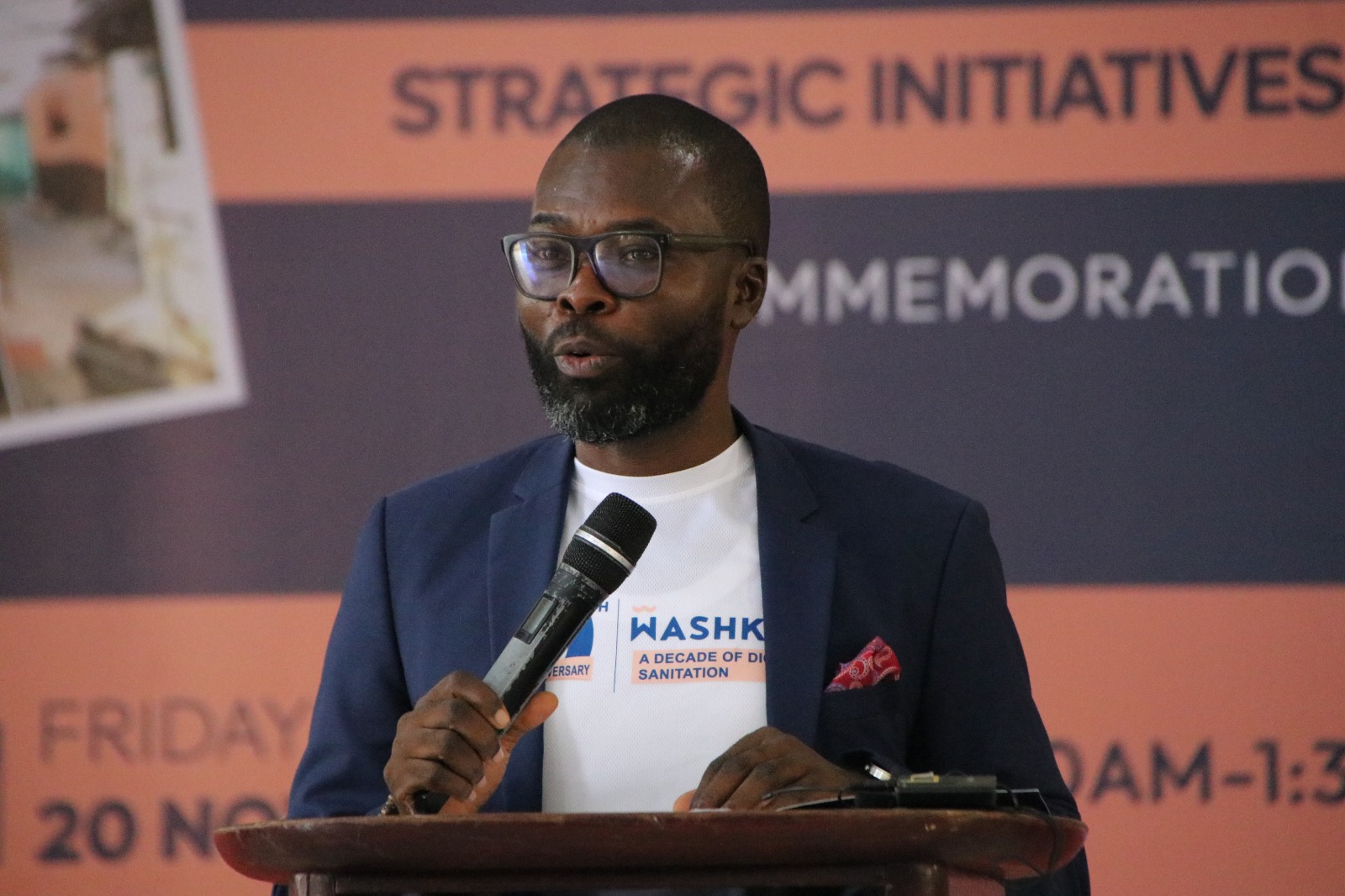
Mr Agbeti made the remarks at the 10th anniversary celebration of Washking Limited at Heritage Christian University College in Amasaman, where he called for a more sustainable approach to sanitation financing and service delivery.
Citing figures from the 2021 Population and Housing Census, he said the scale of the problem required urgent attention from government, businesses, investors and communities.
Drawing from his own experience of living in communities such as Chokor and Banana Inn, where many households lacked private toilet facilities, Mr Agbeti said the sanitation crisis was not a distant problem but one that remained visible in many parts of the country.
He recalled how residents in some communities had to depend on public places of convenience or resort to unsafe practices because they had no toilets at home.
“Sanitation is about dignity, not just a health issue,” he said.
Mr Agbeti said no one should have to wait for hours or walk long distances simply to find a place to relieve themselves, adding that the absence of decent toilet facilities often forced people into undignified situations.
He also drew attention to the effect of poor sanitation on the education of girls, particularly those who miss school during their menstrual periods because their schools lack suitable sanitation facilities.
According to him, the problem goes beyond individual households and has wider consequences for communities and the country.
Untreated waste, he said, ends up in drains and water bodies, contributing to environmental pollution and exposing people to illnesses that place additional pressure on health facilities.
“Sanitation is not a small issue. In my view, it is a development and an economic issue,” he said.
Washking’s journey from 18 toilets
Mr Agbeti praised Washking for its contribution to improving sanitation over the past decade, recalling that the company began with just 18 toilet installations in its first year.
He said the modest beginning demonstrated how determination and commitment could gradually produce meaningful change.
He urged guests at the anniversary celebration to recognise the company’s efforts and support its work in expanding access to safe and affordable sanitation.
According to him, Washking has helped change the conversation around household sanitation by providing toilets designed to treat waste on-site, without the need for conventional sewer connections.
The company’s biodigester toilet systems, he said, offer an alternative for households that cannot easily access conventional sanitation infrastructure.
Mr Agbeti also noted that the company’s work goes beyond toilet construction, as it trains artisans, creates jobs and supports local suppliers.
He said the approach was important because sanitation solutions should not treat low-income households as recipients of charity but as customers who deserve dignity and the freedom to make choices.
He commended the company’s tagline, “Own Your Throne,” saying ownership of a toilet was closely linked to personal dignity and improved living conditions.
Calls for sustainable sanitation financing
The Nova Business School Africa official said Ghana could not rely solely on government, non-governmental organisations and development partners to address its sanitation needs.
While acknowledging the contribution of such institutions over the years, he argued that the existing approach was not sufficient to sustain the sector in the long term.
He pointed to changes in international development funding as a reminder that sanitation programmes needed financing models capable of continuing even when external support declined.
Mr Agbeti said a market-led approach, in which sanitation enterprises provide services and grow through the people they serve, offered a more sustainable path.
He called for affordable financing arrangements that would allow households to own decent toilets without having to pay the full cost upfront.
“We want to shift the narrative from ‘I wish’ into ‘I own’,” he said.
He also appealed for patient capital from investors willing to consider both financial returns and the social impact of their investments.
In addition, he advocated grants that could support innovative sanitation solutions in hard-to-reach communities without creating long-term dependence.
According to him, government should provide the policy direction, businesses should deliver services, investors should provide capital, experts should develop innovative solutions, and communities should contribute trust and participation.
Students urged to become sanitation ambassadors
Mr Agbeti placed particular emphasis on the role of young people, describing them as important partners in efforts to improve sanitation in Ghana.
He urged students attending the event to pay attention to the sanitation conditions in their homes, schools and neighbourhoods, and to raise concerns where facilities were unsafe or inadequate.
He said young people had the ability to influence decisions within their families and would eventually become entrepreneurs, engineers, teachers and public officials responsible for shaping the country’s future.
“The better you understand sanitation today, the better a leader you will be tomorrow,” he told the students.
He encouraged them to keep school toilets clean and practise proper handwashing, saying lasting change often begins with simple everyday habits.
He also called on teachers and school authorities to make sanitation and hygiene an important part of learning and school life.
Washking urged to expand its impact
As the company enters its next decade, Mr Agbeti challenged Washking to build on its achievements and reach more households across the country.
He said the company had already demonstrated what could be achieved through a small beginning and urged it to set more ambitious targets for the years ahead.
He called for the next decade to be marked by greater investment, stronger partnerships and wider access to affordable sanitation.
Mr Agbeti also appealed to government, local assemblies, financial institutions and development partners to move beyond words of encouragement and commit resources to expanding sanitation services.
He said the benefits of investment in sanitation could be seen in healthier children attending school, families living in safer environments and communities protected from the effects of poor waste management.
He congratulated Washking on its 10 years of work and urged the company to remain focused on the households and communities that still lacked access to decent toilet facilities.
“Everyone in Ghana deserves safe, private, dignified toilets,” he said.
He added that the company’s anniversary should not only be a celebration of past achievements but also a starting point for greater efforts to ensure that no household is left behind.
SOURCE: www.ignewss.com