By: Evans Attah Akangla | ignewss – HO, Volta Region
Edited by: Daniel Yao Akpabli
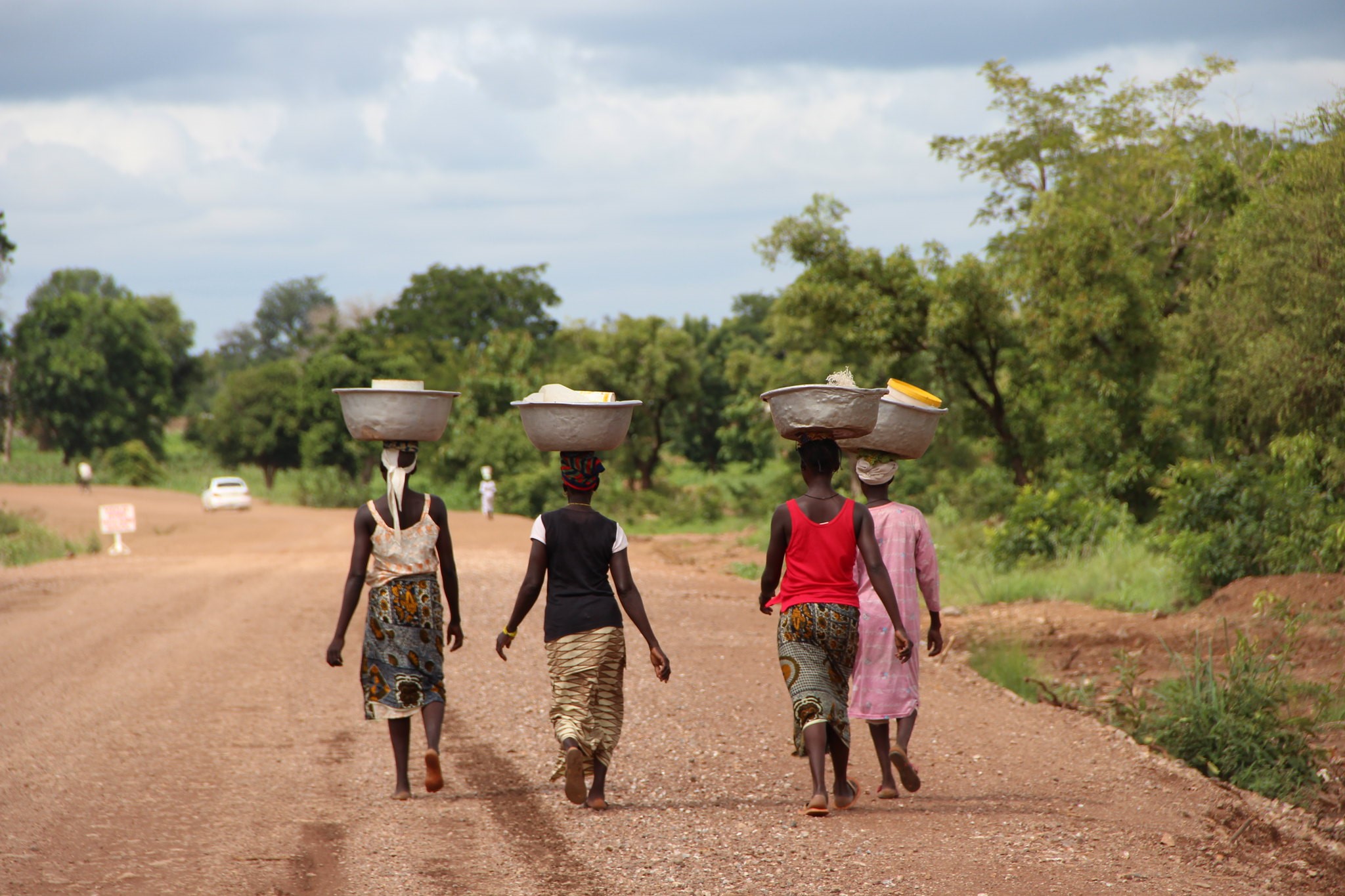
Residents of Nkuabia-Korfe, Dokpo-Korfe and Dorvlo-Korfe in the Ho Municipality of the Volta Region can now access potable water following the mechanisation of a newly constructed borehole through the intervention of their Member of Parliament.
The development has brought relief to the farming communities, which have depended on streams and other unsafe water sources for years. However, residents say their struggle is far from over, as poor road infrastructure, limited access to education and persistent poverty continue to affect their daily lives.
The three (3) communities, located between Akrofu and Sokode Bagble and Ando, fall under the Sokode Bagble and Ando Electoral Area and have a combined population of approximately 200 households.
Nkuabia-Korfe is the largest of the three (3), with about 111 households, followed by Dokpo-Korfe, which has between 37 and 40 households. Dorvlo-Korfe has slightly more than 20 households.
The communities depend largely on subsistence farming, with residents cultivating crops such as cassava, maize and rice to feed their families and meet basic expenses, including school fees.
Years of water hardship
For years, access to safe drinking water remained a major challenge for residents. Some relied on a nearby stream, while others had to travel long distances into town to fetch water for cooking and drinking.
The Assembly Member for the Sokode Bagble and Ando Electoral Area, Hon. Wilson Akorli, who has been pushing for development projects in the underserved communities, said the situation had become particularly difficult for children and women.
“There is a stream that passes through here, and that is what they have been using for a long time,” he told this reporter.
He said residents sometimes had to dig holes in the ground and wait for water to collect before fetching it, especially when other sources were unavailable.
“Sometimes, when they want potable water, they have to walk through the town. For decades now, they have had to walk over 15 kilometres from here to get access to potable water,” he said.
Mr Akorli explained that schoolchildren often carried buckets to school so they could fetch water on their way home.
According to him, the community had endured a water crisis for about a decade, despite being included in the Electricity Company of Ghana (ECG) electrification project in 2021.
He said the borehole project became possible after repeated appeals for assistance, including during the National Democratic Congress (NDC) campaign period.
The Assembly Member said he had initially been uncertain whether the intervention would materialise but expressed relief that the MP had pushed through the necessary arrangements.
“Luckily, the Honourable Member of Parliament (MP) Edem Richmond Kpotosu pushed harder than those conditions. So today, we have very good, potable, mechanised water for the community,” he said.
The facility, fitted with a 5,000-litre polytank, is expected to serve the three (3) communities.
Plans for maintenance
While expressing gratitude for the intervention, Hon. Wilson Akorli said plans were being made to ensure the facility remained functional.
He said a management committee would be established to oversee the borehole and organise its maintenance.
Although the water is expected to be provided free of charge, he stressed that residents would be encouraged to take responsibility for protecting the facility.
“Actually, it is not going to be sold. It is for free. But maintenance culture is very important,” he said.
Poor roads continue to isolate communities.
Beyond the water crisis, residents continue to face difficulties with their roads, particularly during periods of heavy rainfall.
A visit to the communities by this reporter revealed sections of the road had become difficult to access, with a damaged passage and the absence of a proper culvert affecting movement.
The Assembly Member said a poultry farmer had allegedly promised to construct a new culvert over a gutter but had failed to fulfil the commitment.
Some residents also said they had contributed money to buy pebbles for the construction of a culvert, but the structure was washed away by water about two years ago.
The Assembly Member said the situation had made it difficult for vehicles to reach parts of the community, leaving residents to depend on alternative routes.
“Two weeks ago, I came here, and going through was difficult. What will market women and students from school do? So that is the kind of challenge they have,” he said.
He disclosed that he had written to the Ghana Highway Authority in the region for assistance but was advised that the project was beyond the capacity of the Assembly.
The letter was subsequently forwarded to Accra, while the Municipal Chief Executive (MCE) for Ho, Hon. Stephen Adom, reportedly indicated that the bridge had been captured under the government’s Big Push programme.
The Assembly Member said the community was hopeful that the project would be included in the next budget and eventually constructed.
Education remains a concern
Education is another major challenge facing the communities, with Mr Akorli revealing that residents have no school within the immediate area.
He said children had to travel long distances to access education, a situation he described as worrying.
“I always come to them. I support them with stationery and other items. Last year and the year before, I supported the primary school,” he said.
“There is no school in this community. People trek over 15 kilometres to access education. That is the problem.”
He said he had been providing support to pupils and the local primary school through stationery and other educational materials but called for more sustainable interventions to improve access to education.
A call for further support
Despite the new water facility, residents say they still need support to improve their living conditions.
The Assembly Member appealed to government and development partners to consider the communities in the provision of roads, educational facilities and livelihood support.
He said the residents, who rely on small-scale farming, often struggle to earn enough to meet their household needs.
For the people of Nkuabia-Korfe, Dokpo-Korfe and Dorvlo-Korfe, the mechanised borehole represents a major step forward after years of hardship.
But as they celebrate access to safe drinking water, the communities are hoping that the next interventions will address the poor roads, lack of nearby educational facilities and economic difficulties that continue to hold them back.
Residents express relief and appeal for better roads.
Residents of Nkuabia-Korfe have welcomed the provision of potable water, describing the new borehole as a major relief after decades of struggling to access safe drinking water.
One resident, Kafui Sokpe, said the community had lived for more than 50 years without access to potable water, making the new facility a significant development.
She expressed gratitude to the Member of Parliament for responding to their request but appealed for the construction of an accessible road and a proper bridge to help farmers transport their produce to market with less difficulty.
Another resident also commended the MP and his wife for coming to the community’s aid, noting that the borehole was completed within a week after the intervention.
The resident, however, said the poor state of the road and the damaged bridge continued to make movement difficult, particularly for farmers who depend on the road to carry their produce to market.
Residents in these communities believe that improving the road network and constructing a proper bridge will boost their farming activities, ease transportation and improve access to essential services.
SOURCE: www.ignewss.com